In the digital world we live in, businesses are increasingly reliant on cloud infrastructure and SaaS applications to drive operations. Whether it’s an ERP system, a customer relationship management tool, or your day-to-day email communications, the cloud has revolutionised the way companies operate. However, with this shift comes new vulnerabilities. Cloud outages and cybersecurity threats are on the rise, posing significant risks to your business continuity, data security, and overall operational resilience.
In this blog, we will explore the growing concerns around cloud outages and cyber threats, how they impact businesses, and best practices to safeguard your operations. We’ll also highlight some of the key takeaways from our upcoming webinar, “Protect Your Business: Surviving Cloud Outages & Cyber Threats”, and show you how to secure your business infrastructure effectively.
Why Are Cloud Outages and Cyber Threats a Growing Concern?
Cloud services have made it easier than ever to scale business operations and integrate multiple services. However, with the increasing reliance on these platforms, businesses are becoming more exposed to potential risks. Outages and cyber threats are two of the most significant challenges:
-
Cloud Outages: These disruptions happen when the cloud provider experiences an issue—whether from server malfunctions, network failures, or even regional power outages. These incidents can lead to prolonged downtimes, loss of access to critical data, and substantial business interruptions.
-
Cybersecurity Threats: As cybercriminals become more sophisticated, businesses, especially SMEs, are frequent targets for ransomware attacks, data breaches, and phishing scams. Cyber attackers are often after sensitive business data or looking to disrupt operations by exploiting vulnerabilities in cloud systems or connected platforms.
As SMEs are increasingly adopting cloud-based ERPs like Odoo, they must prioritise both security and resilience to protect against these rising threats.
Impact of Cloud Failures and Cyber Attacks on Your Business
The impact of cloud failures and cyber attacks is not just technical, it can affect every part of your business. Here’s a breakdown of some of the real-world consequences of such events:
-
Downtime and Loss of Access to Critical Data: If your cloud-based ERP or other critical systems are down, your employees can’t access essential tools or customer data. This results in lost orders, delayed shipments, and slowed decision-making.
-
Reputational Damage: For businesses that rely on customer data, a breach can severely damage your brand reputation. Customers expect their information to be secure, and even one incident can lead to customer churn.
-
Financial Losses: Whether it’s from operational downtime or the cost of a ransomware recovery, businesses face significant financial losses during such incidents. The cost of recovering from a cyberattack can often far exceed the immediate losses, especially when considering legal fees, regulatory fines, and public relations efforts.
-
Legal and Compliance Risks: With increased reliance on cloud services, many businesses are also subject to data protection regulations like GDPR, CCPA, and HIPAA. A breach or outage could expose your company to non-compliance fines.
Best Practices for Protecting Your Business from Cloud Disasters
To help businesses defend against cloud outages and cyber threats, here are some best practices and preventative measures to follow:
-
Regular Backups & Disaster Recovery Plans: Ensure your business has regular, automated backups of critical data and systems. This is especially vital for businesses using cloud-based ERPs like Odoo. Having off-site backups or a staging branch of your system will allow for quick restoration in the event of a failure. A solid disaster recovery playbook ensures your team is prepared to act quickly.
-
Multi-Zone Hosting and Redundancy: Redundancy is a key strategy to avoid downtime. By using multi-zone hosting, you distribute your workload across different regions or availability zones. This way, if one zone experiences an issue, your business can continue operating from another zone. This is a key best practice for businesses running cloud services like Odoo.sh.
-
Implement “Zero Trust” Security: A Zero Trust model means that you don’t automatically trust any device or user, even if they are inside your network. You should always verify before granting access. This can be particularly effective in preventing unauthorised access during a cyberattack or ransomware incident.
-
Continuous Monitoring and Alerting: Monitoring your cloud infrastructure and cloud-based ERP (like Odoo) for signs of trouble is essential. Automated alerting systems should notify your team of any suspicious activity or service disruptions, allowing for a fast response.
-
Educate Your Team About Cybersecurity: Employees are often the first line of defense against cyber threats. Conduct regular training sessions on how to spot phishing attempts, handle sensitive data, and follow security best practices.
-
Secure Integrations: Many businesses connect their ERP systems with third-party applications, payment gateways, and other tools. Ensure these integrations are properly secured with encryption, access controls, and regular security reviews.
-
Ensure Compliance and Regular Security Audits: Periodically audit your cloud-hosted systems for security and compliance with industry regulations. Ensure your cloud provider follows industry standards for data protection and availability.
Odoo’s Role in Securing Your Business
For businesses using or considering Odoo, it’s important to understand the security options available with the platform. Whether you are using Odoo.sh, hosting on AWS or Azure, or considering on-premise deployment, you must take steps to secure your environment.
-
Odoo.sh: If you’re using Odoo.sh, the platform is hosted and maintained by Odoo, offering built-in scalability and security updates. It provides automatic backups and staging environments for testing, which helps reduce the impact of cloud outages.
-
On-Premise & Self-Hosting: For those considering self-hosting on platforms, make sure to implement strong firewall configurations, access controls, and regular security patches to secure your Odoo ERP from external threats.
Why Attend Our Webinar
In our upcoming free webinar, “Protect Your Business: Surviving Cloud Outages & Cyber Threats”, you’ll gain practical, actionable insights on how to safeguard your cloud-based ERP systems, including Odoo, from these risks. Waleed Alsaleh from Odoo and Robert Abell from Target Integration will guide you through best practices and real-world examples of businesses that faced these challenges.
By attending, you’ll learn:
-
How cloud outages and cyber threats impact your business
-
Practical steps to secure your ERP system and cloud infrastructure
-
How to build a resilient, future-proof cloud architecture
-
Real-world examples of businesses recovering from cloud and cybersecurity incidents
Register Now for Our Webinar
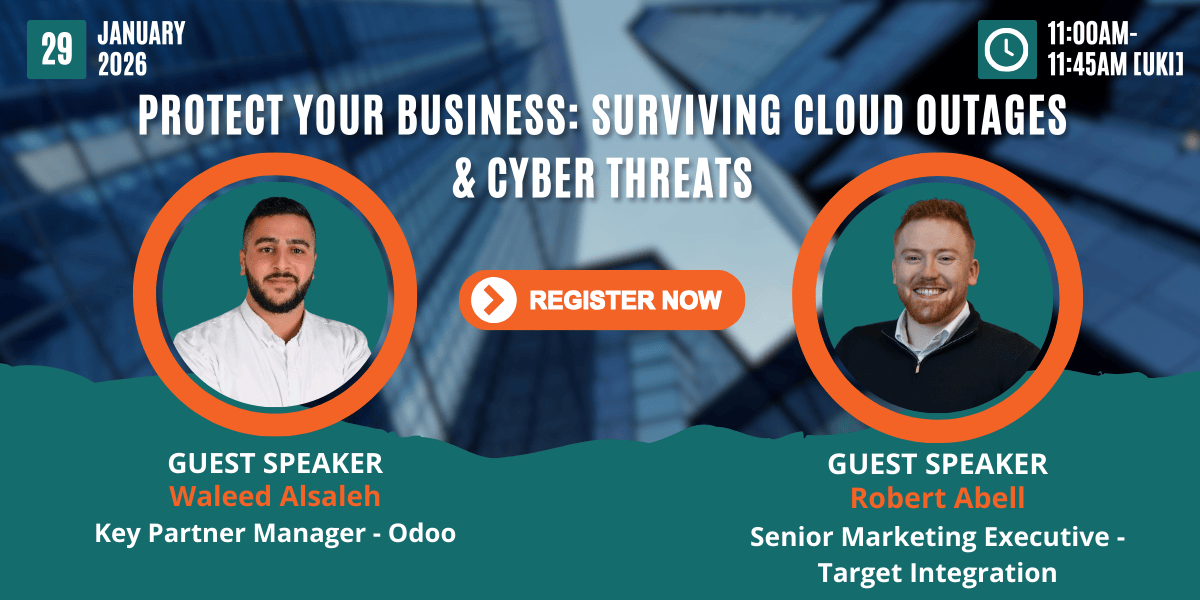
Date: 29th January 2026
Time: 11:00 AM – 11:45 AM (UKI)
👉